Types of Landscape Lighting: A Simple Guide for Homeowners
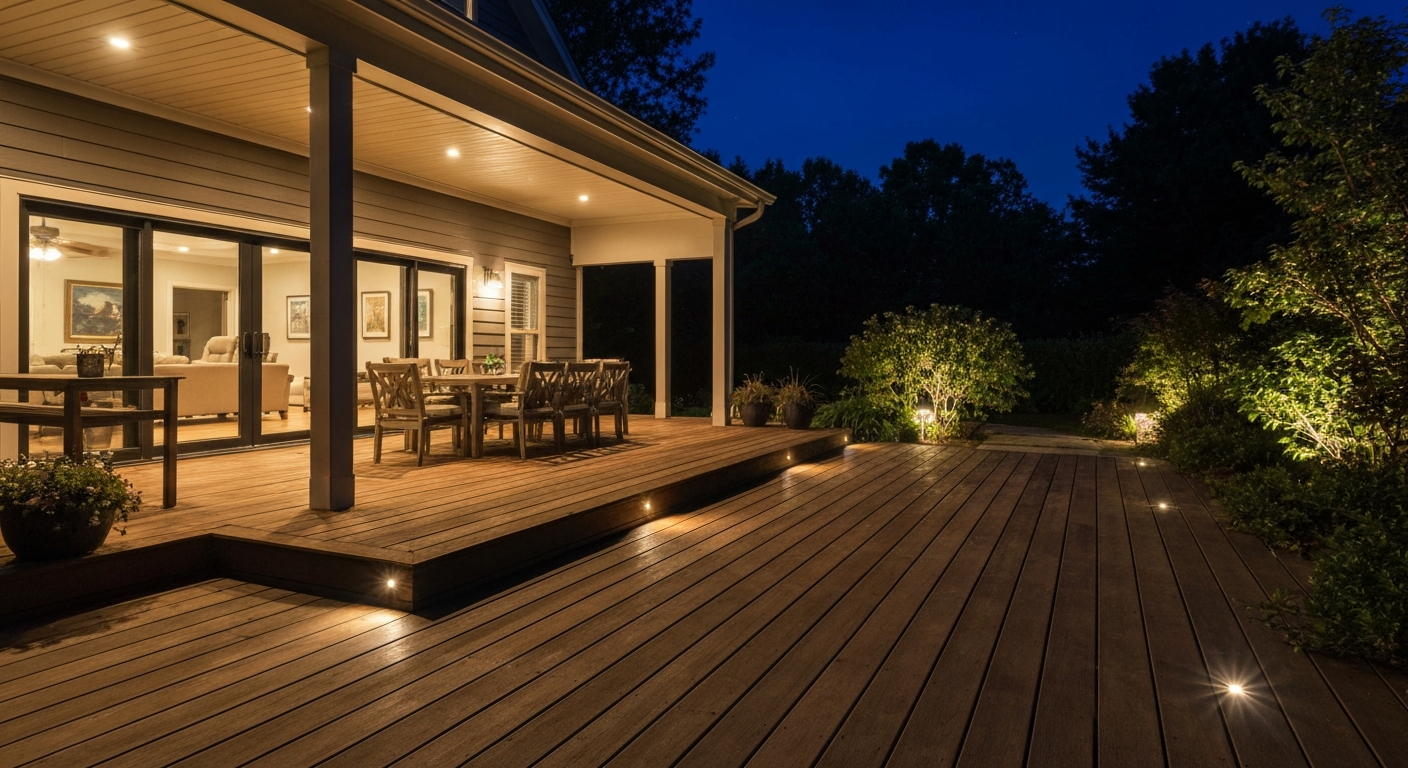
Landscape lighting isn't one thing — it's a toolkit. The reason a professional design looks so much better than a row of store-bought path lights is that it combines several techniques, each doing a specific job. Here are the most common types and where each one shines, so you can picture what your own property could look like.
Path and area lighting
The most familiar type. Path lights are short fixtures that cast a soft pool of light downward onto walkways, driveways, and garden edges. Their main job is safety and guidance — helping people move around your property after dark without stumbling — but a well-spaced run of path lights also frames your landscaping beautifully. The common mistake here is overdoing it: evenly spaced lights like a runway look artificial. Good design staggers and spaces them for a natural effect.
Uplighting
Uplighting places fixtures at ground level, aimed upward, to wash light across a feature — a tree, a stone wall, a column, or an interesting architectural detail. It's one of the most dramatic techniques because it creates depth and highlights texture. A mature tree lit from below becomes a nighttime centerpiece. Uplighting is where a yard goes from "lit" to "designed."
Spotlighting and accent lighting
Spotlighting uses a tighter, more focused beam to draw the eye to one specific object — a specimen plant, a sculpture, a water feature, or a house number. Where uplighting washes broadly, a spotlight points. Used sparingly, accent lights create focal points and visual hierarchy so the whole scene doesn't compete for attention.
Architectural and wall lighting
These fixtures highlight the structure of your home itself — grazing light down or up a textured wall, lighting columns and entryways, or outlining the lines of the house. Architectural lighting boosts curb appeal and makes an entrance feel welcoming and secure at the same time.
Deck, patio, and step lighting
Lighting built into or around your outdoor living spaces — under railings, along steps, beneath seating walls. This type is about making patios and decks usable and safe after dark, with a warm ambiance that extends your evenings outside. Step lights in particular prevent trips on stairs while adding a polished look.
Security lighting
Brighter, wider-coverage lighting aimed at deterring intruders and eliminating dark corners around the property. The best approach blends security into the overall design rather than bolting on harsh floodlights — you can have a safe, well-covered yard that still looks elegant.
Moonlighting and downlighting
A subtler technique: fixtures mounted high in trees or on structures, casting a soft, dappled light downward that mimics natural moonlight. It's understated and romantic, and it's great for illuminating a broad area gently without any single harsh source.
The real secret: combining them
No single type makes a great landscape. The magic is in layering — path lights for safety, uplighting for drama, accents for focal points, and deck lighting for livability — all balanced so the property reads as one cohesive scene. That balance is exactly what separates a professional design from a box of lights from the hardware store.
If you're wondering are LED landscape lights worth it for these different techniques, or curious about what landscape lighting costs when combining them, we can help. If you're not sure which types your property needs, that's normal — it's what a design consultation is for. At Sparks Landscape Lighting, we walk your property, listen to what you want, and design a layered lighting plan built for your yard and Nevada's climate. Call (775) 593-6295 for a free consultation on landscape lighting in Sparks, NV.
Frequently asked questions
Which type of landscape lighting is most popular?
Path lighting and uplighting are the two most common, because together they cover both safety and visual impact. Most designs start with these and layer in accents from there.
Do I need every type of lighting?
No. A good design uses only the techniques your specific property benefits from. More lighting isn't better — the right lighting in the right places is.
Ready to upgrade your lighting?
Contact our Sparks team today for a free on-site design consultation.
Get a Free Quote